London
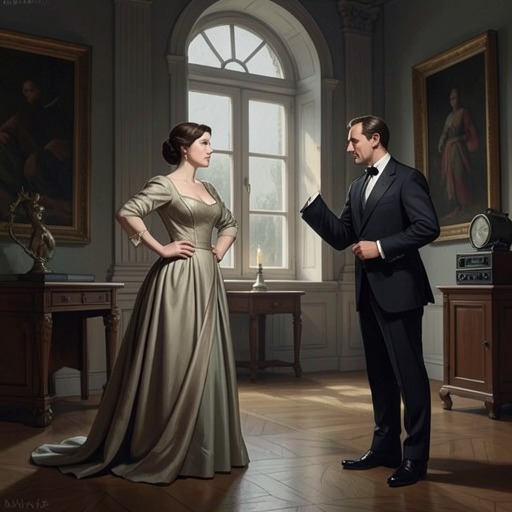
Wolf HallLondon is the novel’s political and commercial center, where Thomas Cromwell turns knowledge of trade, law, and finance into influence and helps translate royal ambition into public policy. It is also a city of spectacle: its streets and river carry royal ceremonies, while Parliament and the court make the struggle over jurisdiction and succession visible to its inhabitants.
Political and commercial center
Cromwell’s London work connects several kinds of power. His legal practice prospers, and he arranges international loans for a fee, assesses noble estates, advises merchants about overseas trading partners, and arbitrates commercial disputes. His expertise rests on close attention to facts: for an estate, he examines land values, crops, water, and buildings, then recommends capable managers and auditable accounts. The same practical intelligence serves him in the city’s markets and in royal government.
The contrast with Thomas More clarifies the city’s competing habits of thought. While More wakes to Latin prayers and religious self-discipline, Cromwell and Rafe Sadler follow exchange rates in Lombard Street. London’s commercial life is not merely the background to politics: its networks of credit, information, and professional trust are among the resources Cromwell uses to operate at court. His reputation ranges from biblical learning and legal argument to finding goods such as Venetian glassware, and from soothing timid clients to making creditors weep.
Parliament and royal policy
In the winter of 1529–spring 1530, Cromwell seeks a seat in the new Parliament. Rafe Sadler secures him Taunton, a seat shaped by patronage: lords, bishops, and the king influence elections, and Cromwell’s entry depends on the approval of both Henry VIII and Thomas Howard. London is where the consequences of those relationships are negotiated, as Cromwell weighs his obligations to the fallen Thomas Wolsey against the approaches of powerful nobles.
Later, Cromwell brings a bill to suspend payment of annates to Rome before the Commons. Instead of relying on the usual procedure, he asks the members to divide physically between support and opposition. Henry watches the division and learns who is with him; afterward, he gives Cromwell a grave nod. The same tactic will not work in the Lords, where the king must appear and argue his case in person. The episode makes London’s parliamentary chambers a testing ground for royal policy and a means of identifying and separating opponents.
In 1534, Cromwell takes arguments drawn from Marsiglio of Padua to Henry VIII. The propositions deny that Christ made popes rulers over Christians and contend that priests remain subjects of the state. They place the power to govern and legislate with the prince and the representative legislative body, including authority over marriage and legitimacy. They also challenge the church’s claims to land, offices, and wealth, proposing that public authority determine clerical support and use church resources for the common good. The discussion links religious jurisdiction to the political institutions at work in London: it presents Parliament as a source of the king’s authority and domestic law as an instrument for asserting it.
Court factions and the city outside
London’s political maneuvering runs through personal and informal networks as well as institutions. At Austin Friars, Cromwell and Stephen Gardiner discuss Thomas More’s refusal to state his views plainly to his wife, Alice, and speculate about how long the king will tolerate More’s declared unwillingness to meddle in the divorce. Gardiner’s access to information, Cromwell’s ties to Anne Boleyn, and the competing interests of Thomas Howard and Thomas Boleyn shape what can be said and to whom. The city’s political center is therefore not confined to council rooms: conversations on a barge and visits between households are part of the work of reading allegiances.
Cromwell’s own house stands in a changing relationship with the public city. As business accumulates at Austin Friars, merchants, clergy, and petitioners arrive, and small groups of Londoners gather outside the gate to watch the servants and liveries of important households come and go. Cromwell recognizes in some of the onlookers the sons of men who had once gathered near his father’s forge. He arranges his face, conscious that his household has become a public sign of shifting influence. He also has beer, bread, and, as the mornings grow colder, broth sent out to the men at the gate. The scene joins the visible rise of a former smith’s son to the daily needs of the city around him.
Royal spectacle and public allegiance
London’s river and streets provide the stage for Anne Boleyn’s arrival for her coronation. Fifty barges supplied by the city’s livery companies lead a procession from Blackwall toward Greenwich Palace, where Anne boards a barge formerly associated with Katherine of Aragon. The royal party travels with musicians, flags, and a large flotilla; Londoners line both banks, while ships fire salutes. Henry meets Anne at the Tower, and the display makes her new position a public event in the capital.
The pageantry carries a political message as well as ceremonial splendor. Anne appears with the king at High Mass on Easter Sunday and is prayed for as Queen of England; the day before, Cromwell’s bill has passed Parliament, and Henry appoints him chancellor of the exchequer. In the procession and in the church, the city sees a new queen presented as a fact of royal government. Cromwell watches the courtiers’ responses, including the restrained disapproval of Sir Nicholas Carew, and reads the ceremony as a moment in which private opposition must confront a public settlement.
A city of persuasion and exposure
London’s public spaces also serve the government’s effort to contain political and religious dissent. In the cold near the end of November, Elizabeth Barton and several supporters perform penance at Paul’s Cross before a large, lively crowd. Her confession is read aloud, and she asks Londoners to pray for her and for the king’s mercy. Cromwell considers the event a necessary public demonstration against prophecies that threaten the regime with divine punishment; he plans to take the spectacle to Canterbury as well. The episode shows how a city crowd can become an audience for official efforts to define the meaning of religious dissent.
Across these episodes, London is both a working capital and a public forum. Markets, parliamentary divisions, household entrances, churches, and river processions all reveal different forms of power and the people who support or resist them. The city gives Cromwell a place to make his financial and political skills consequential, but it also exposes his rise to observation: the same crowds that watch royal pageantry gather at his gate to see whose authority is coming and going.